
Gozo
Gozo has always moved at a different pace from Malta. Larger, greener, and more deeply rural, the island feels shaped as much by the sea as by the land itself. For sailors, Gozo is not a place to rush through on a single afternoon. Its coastline, anchorages, and evening atmosphere reveal their full character only when time is allowed to stretch beyond daylight hours.
This is why Gozo has long been favoured by those planning longer sailing routes rather than brief coastal stops
Gozo’s Maritime Character
Throughout history, Gozo functioned as both refuge and frontier. Positioned at the edge of the Maltese archipelago, it was exposed to passing trade routes, raids, and changing powers. Small natural harbours and inlets offered protection for fishing boats and coastal traders, while higher ground provided lookout points across open sea.
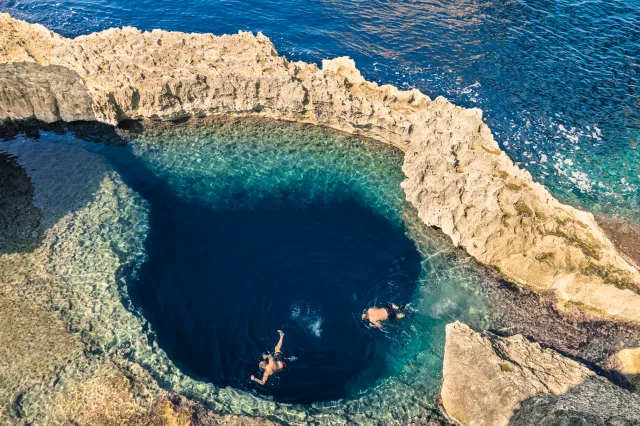
Unlike Malta’s more urbanised ports, many of Gozo’s anchorages remain closely tied to their original purpose. Bays such as Xlendi, Mġarr ix-Xini, and Dwejra were shaped by necessity rather than development, retaining a sense of practicality that appeals strongly to sailors.
A Coastline That Rewards Time
Approaching Gozo by boat, the island doesn’t announce itself loudly. There’s no single moment where it “arrives.” Instead, the coastline starts to change quietly. Cliffs rise higher, then suddenly pull back, opening into narrow inlets that feel carved rather than designed. The limestone reflects light differently here — softer, warmer — and from the water everything feels stretched out, unhurried.
A day along this coast rarely follows a fixed plan. A calm afternoon might turn into an unplanned swim in a small cove that wasn’t on the chart, simply because the water looks inviting. The charter boat drifts, the anchor goes down, and time slows. No beach clubs, no background noise — just the sound of water against rock and the occasional echo from the cliffs.
Moving on doesn’t mean going far. Short passages connect one anchorage to the next, each with a slightly different feel. One bay offers protection from the wind, another opens wider to the horizon. From the deck of a yacht charter, these transitions become part of the experience rather than something to get through.
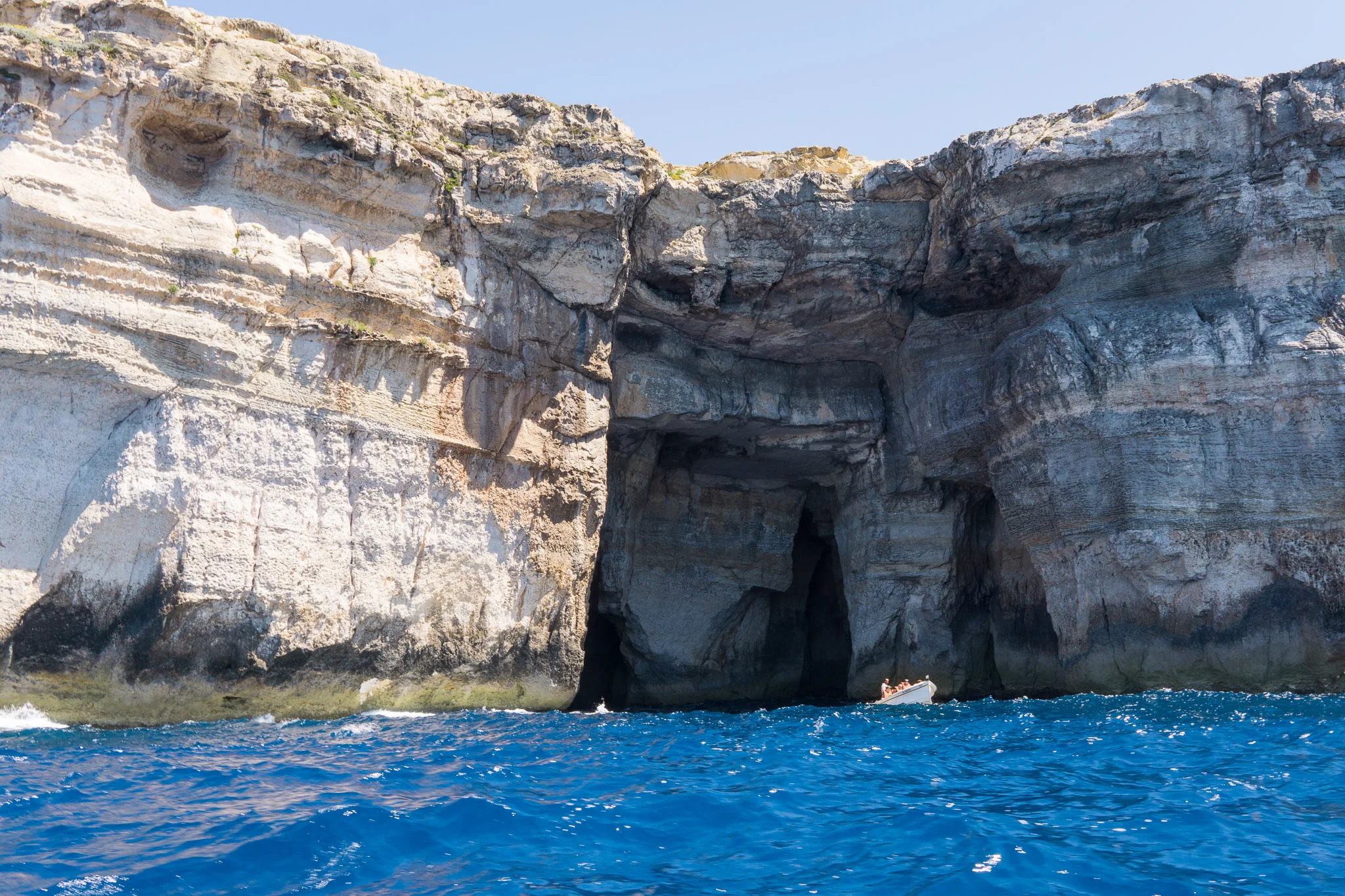
Gebla tal-Halfa
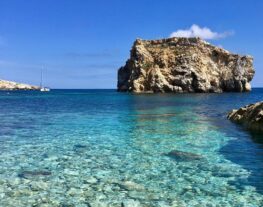
Ġebla tal-Ħalfa is a striking rock formation along Gozo’s rugged coastline, standing apart from the shore like a quiet marker in the sea. Its name, meaning “the half rock,” reflects both its shape and its long-standing presence in local maritime awareness. Approached from the water, the rock feels isolated and timeless, framed by deep blue water and steep limestone surroundings. For boats passing along this stretch of coast, it serves as a visual waypoint rather than a destination — a reminder of how Gozo’s shoreline has always been read and understood from the sea.
Dahlet Qorrot
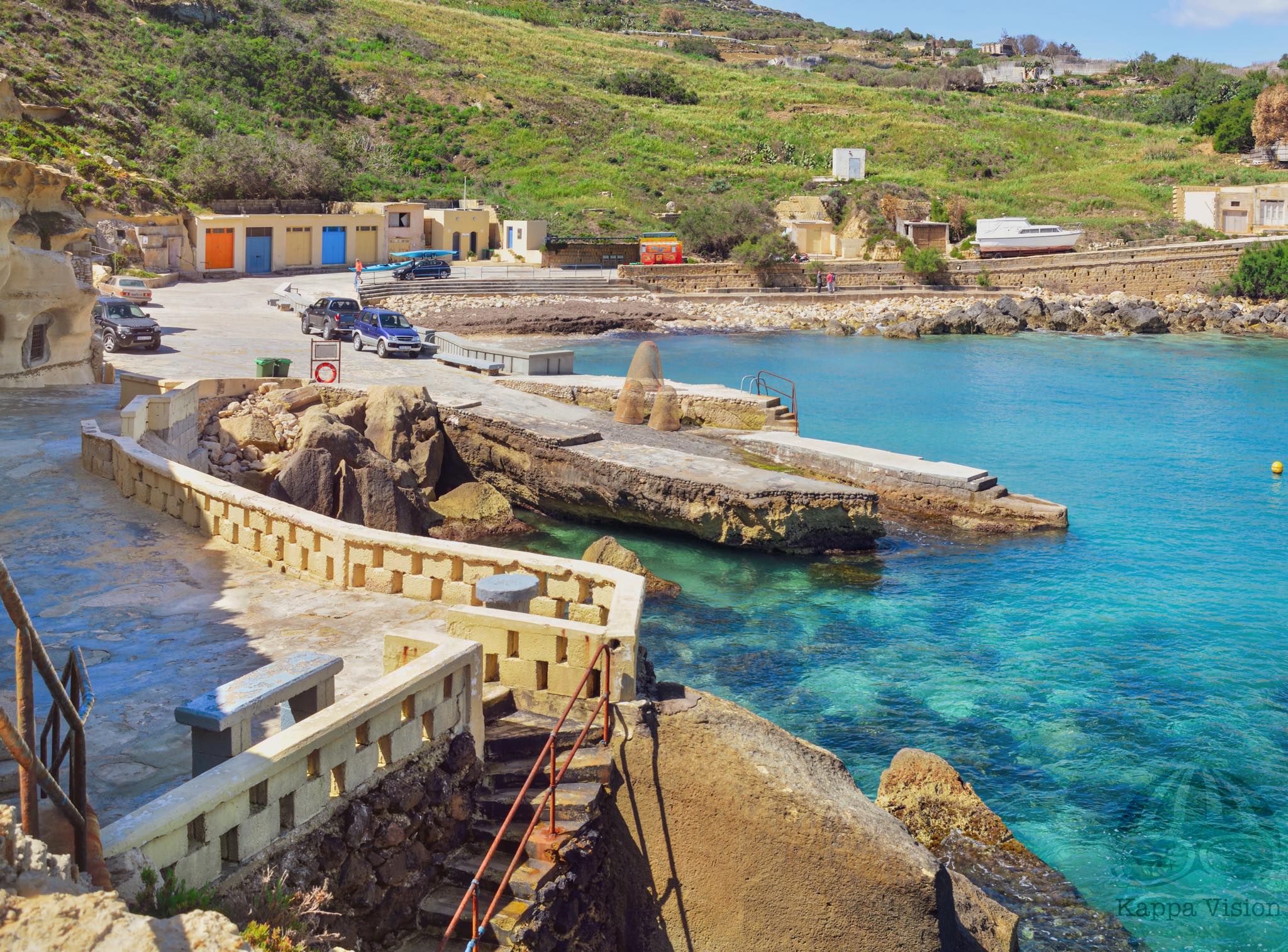
Daħlet Qorrot is one of Gozo’s more secluded bays, tucked into the island’s northeast coastline and shaped by traditional fishing use rather than tourism. From the water, the bay feels quiet and enclosed, with darker rock, deep blue water, and a shoreline still lined with small boathouses and slipways. Its orientation offers shelter in certain conditions, making it a calm and unhurried stop when moving along Gozo’s coast. Approaching by boat highlights the bay’s character best — understated, practical, and closely tied to Gozo’s maritime past.
San Blas

San Blas Bay is a small, sheltered cove on Gozo’s northeast coast, known for its reddish-golden sand and clear, shallow water near shore. Approached from the sea, the bay feels compact and protected, framed by low cliffs that soften the swell and create calm swimming conditions. Its scale makes it easy to overlook from land, but from the water it reveals a quiet charm — a place best enjoyed slowly, with time to drift, swim, and take in the contrast between sand, rock, and deepening blue further out.
Ramla il-Hamra
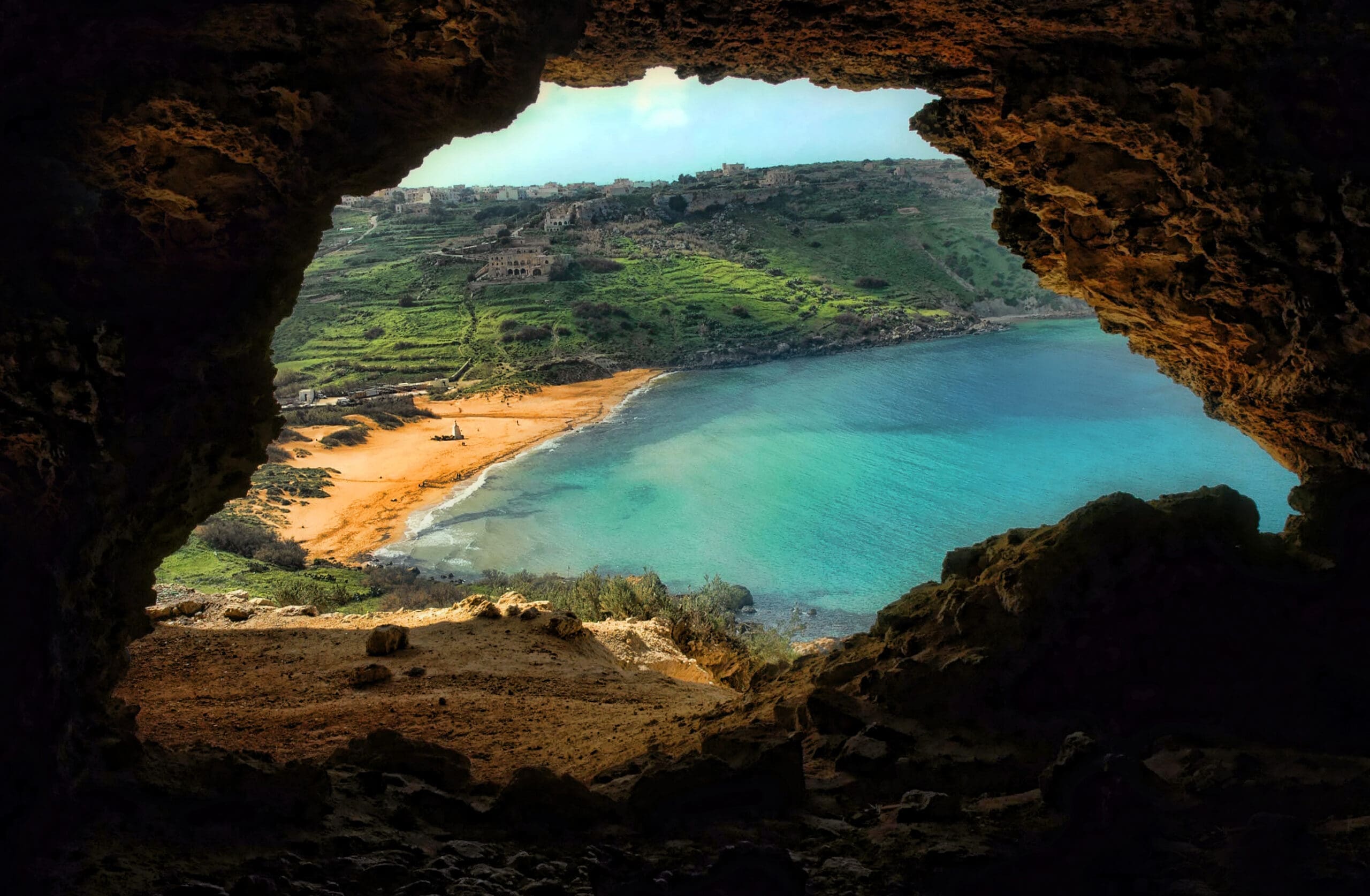
Ramla il-Ħamra is Gozo’s most distinctive beach, immediately recognisable by its wide stretch of deep red sand. From the sea, the bay opens gradually, framed by green slopes and low cliffs rather than steep rock, giving it a softer, more expansive feel than many other Gozo anchorages. The sandy seabed creates lighter water close to shore, deepening to rich blue further out, making the contrast especially striking when approaching by boat. Ramla il-Ħamra feels open and grounding — a natural pause along Gozo’s coastline where land and sea meet without interruption.
Natural Anchorages and Shelter
Gozo offers several anchorages that are well suited to remaining in place overnight, depending on conditions. Deep inlets and curved bays provide natural protection, while the island’s position relative to prevailing winds creates opportunities for sheltered stops on both its southern and western sides.
Historically, these anchorages were used as holding points — places where boats could wait safely rather than press on unnecessarily. That same logic continues to shape how Gozo is experienced from the water today.
Many visitors know Gozo through its landmarks: the Citadel, coastal churches, and rugged landscapes. From the sea, however, the island presents a different identity — quieter, more self-contained, and deeply tied to natural cycles.
When explored over several days, Gozo feels less like a destination and more like a temporary home port. Its scale allows for familiarity without repetition, while its coastline continues to offer variation with each anchorage.
A Natural Fit for Longer Routes
Gozo’s distance from Malta, combined with its protected bays and slower pace, makes it particularly well suited to itineraries that unfold over time rather than hours. It encourages a sailing style based on movement and pause, rather than arrival and departure.
For those exploring the Maltese islands by sea, Gozo often becomes the point where the journey shifts from sightseeing to immersion — where nights matter as much as days, and where the experience is shaped as much by stillness as by motion.